

Aspendos Ancient Theatre: A Roman Legacy Near Belek
A comprehensive guide to Aspendos Ancient Theatre — its Roman-era history, architect Zeno, its Seljuk-period reuse, and its significance today, based on official sources.
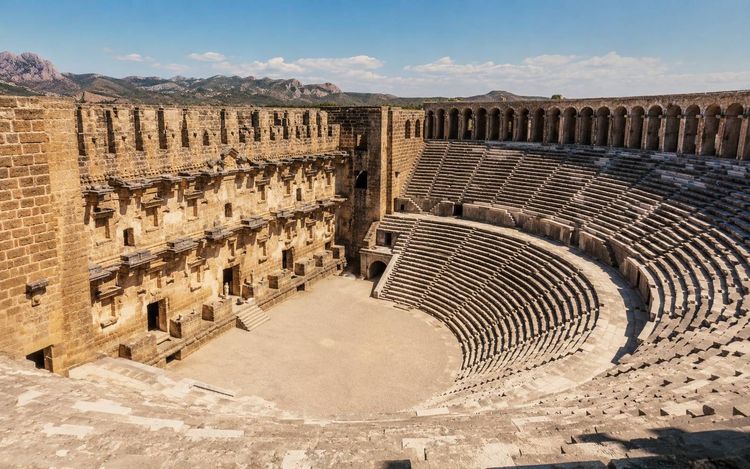
Rising near Belek, in Antalya's Serik district, Aspendos Ancient Theatre is widely regarded as the best-preserved Roman theatre in the Mediterranean world. Built in the 2nd century CE, this monumental structure is not only a masterpiece of Roman architecture but also a witness to a layered history — one that continued into the Seljuk period, when the building was put back into use. This guide covers who built Aspendos and when, its architectural features, how it was used during the Seljuk era, and why it still matters today.
What Is Aspendos Ancient Theatre?
Aspendos is the site of an ancient city in the historic region of Pamphylia. Today, the most impressive surviving structure of that city — its theatre — welcomes visitors near Belek, within the boundaries of Antalya's Serik district. Regarded as one of the finest surviving examples of Roman theatre architecture, it's one of the region's most important historical and cultural stops.
Who Built It? Zeno and Roman-Era Architecture
Aspendos Theatre was built during the reign of Emperor Marcus Aurelius (161–180 CE) by the architect Zeno, son of Theodoros. According to Greek and Latin inscriptions at the entrance, its construction was funded by two wealthy brothers, Curtius Crispinus and Curtius Auspicatus. This detail shows that the theatre wasn't just a state structure — it was also a legacy left to the city by its prominent families.
Capacity and Architectural Features
With a seating capacity of 15,000 to 20,000, Aspendos Theatre was one of the largest structures of its era. Reflecting the height of Roman theatrical architecture and construction technique, it's described today as "one of the most distinguished surviving examples of Roman-era theatres." The semicircular seating area, the stage building, and the architectural balance between them make it one of the most recognized examples of Roman theatre design.
Aspendos in the Seljuk Period
One of the reasons Aspendos has survived so intact is that it continued to be used during the Seljuk period. The Seljuks carried out repairs to the structure — the monumental gate added at the centre of the facade and the distinctive dark red zigzag-patterned plaster on it date from this period. The stage building is thought to have been used as a caravanserai at the time. In other words, Aspendos isn't just a Roman structure — it's also an example of a layered history of use that stretches from Rome to the Seljuks.
Why Is It So Well Preserved?
Aspendos Theatre is regarded as the best-preserved Roman theatre in the Mediterranean world. Its continued functional use during the Seljuk period, rather than being abandoned to ruin, is thought to have played a part in this state of preservation. Mustafa Kemal Atatürk's visit to the site in 1930, when he ordered its restoration and reuse, was also an important turning point in this process.
Its Acoustics
One of the notable features that sets Aspendos Theatre apart from other ancient theatres is its acoustics; the quality of its sound is widely cited as one of the qualities that makes it a remarkable example of Roman-era architecture.
UNESCO Status and Its Significance Today
Aspendos Theatre and the nearby aqueduct have been on UNESCO's Tentative World Heritage List since 2015. The structure isn't only a site to visit — it also continues to host cultural events today; the opera and ballet performances staged on this magnificent stage are a rare example of acoustics built thousands of years ago still translating into a living artistic experience.
The Cultural Route Linking Aspendos to Belek
Aspendos is one of the key stops travelers visiting the Belek area include in their cultural itinerary. For general information about Belek and other nearby places worth seeing, see our Belek VIP Transfer & Travel Guide.
Frequently Asked Questions
When was Aspendos Ancient Theatre built?
The theatre was built during the reign of Emperor Marcus Aurelius (161–180 CE) by the architect Zeno.
What is the capacity of Aspendos Theatre?
The structure has a seating capacity of 15,000 to 20,000.
Why is Aspendos so well preserved?
Its reuse as a caravanserai during the Seljuk period and its restoration on Atatürk's orders in 1930 are thought to have contributed to how intact it remains today.
Where is Aspendos located?
It's in Antalya's Serik district, near Belek.

Plan your Antalya VIP transfer
Explore our fixed-rate routes for comfortable airport, hotel, and regional travel.
Book a Transfer